
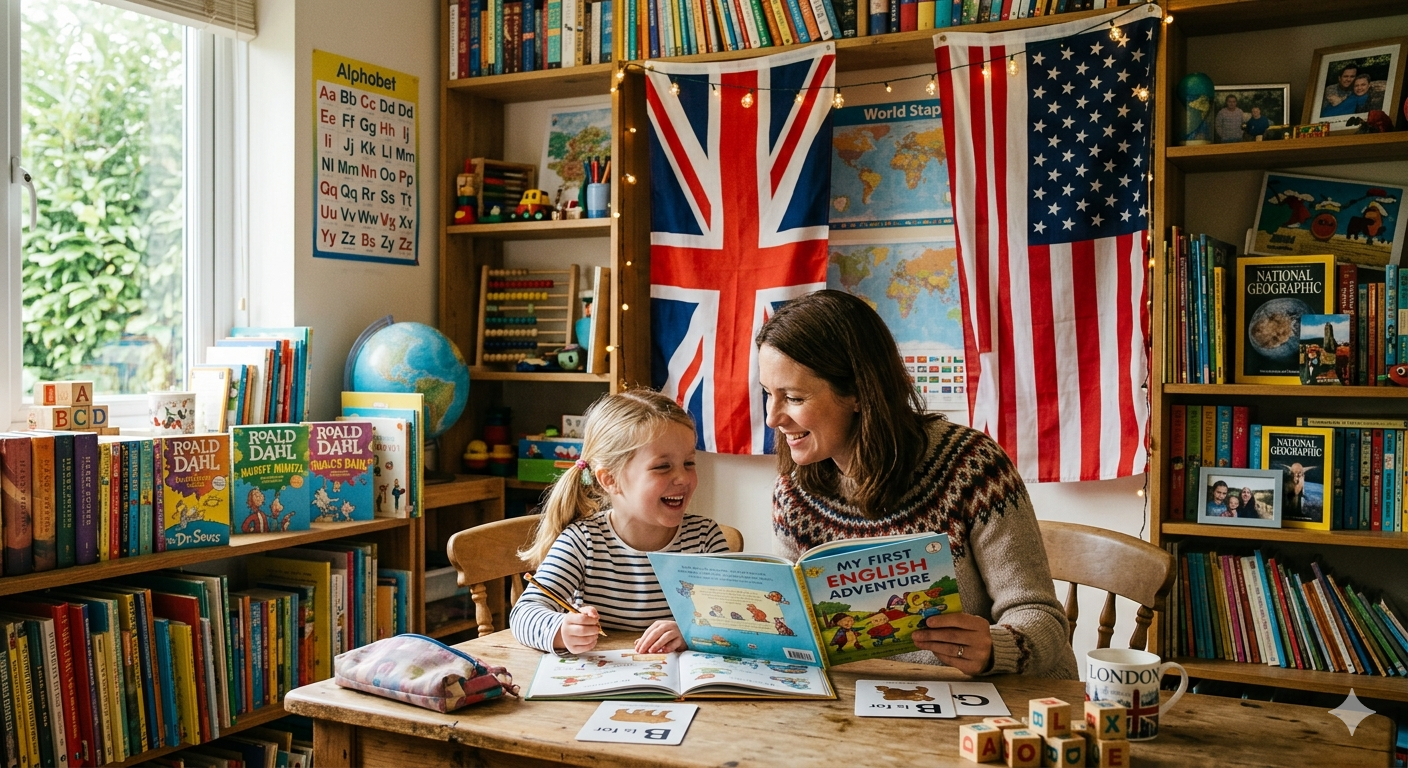
Language is the foundation of human communication and an essential tool for understanding the world. In today’s globalized environment, providing language education at an early age is becoming increasingly relevant. Neuroscientific studies consistently demonstrate that acquiring a foreign language has a decisive impact on a child’s cognitive development, social skills, and long-term academic success.
The first years of a child’s life are uniquely critical for language development. Scientists have established that the human brain is most receptive to language acquisition during early childhood, typically between the ages of 6 and 9. During this period, a child’s brain exhibits high plasticity, possessing an amazing capacity to absorb and process new information at an accelerated pace.
Why Should a Child Start Learning a Foreign Language at an Early Age?
Children who master multiple languages early in life gain a significant advantage over their peers. Research (such as Chan, 2016; Govindarajan, 2019) shows that bilingual or multilingual children possess:
- Cognitive Flexibility and Higher IQ: Learning a foreign language enhances problem-solving skills, memory retention, and critical thinking.
- Metalinguistic Awareness: Children grasp how the grammatical and lexical structures of a language work much more easily, which also helps them better perceive their native language.
- Ease of Learning New Languages: In early childhood, the brain becomes adept at recognizing linguistic patterns, making the study of a third or fourth language considerably easier in the future.
These cognitive benefits persist into adulthood, helping individuals throughout their lives in professional growth and career advancement.
Social Skills and Emotional Intelligence
In addition to cognitive benefits, foreign language education for children serves as a foundation for social and emotional development. When children speak an international language, it becomes easier for them to communicate, overcome language barriers, and establish strong social connections (Chen, 2023).
Group classes foster collaboration and cooperation, as children work together to overcome linguistic challenges (Norrman, 2023). This experience helps them develop essential life skills, such as:
- Teamwork and leadership;
- Patience and the ability to listen to others;
- Tolerance toward different cultures and viewpoints.
Despite these obvious benefits, language education in many educational systems begins at a later age, long after the critical period for natural language acquisition has passed. This is precisely why choosing the right environment and course on time is so important.
Looking for the Best English Language Course for Children?
If you want your child to learn English naturally, without stress, and through modern methodologies, the SpeakUp Language Center offers programs specially adapted for children.
Our English language courses for children focus on developing reading, writing, listening and speaking skills, enriching vocabulary, and breaking down language barriers. Through interactive games, engaging activities, and experienced teachers, children begin thinking and speaking in English from the very first lesson.
Make your child’s educational journey productive and interesting. The knowledge gained with us will serve as a solid foundation for their future academic and personal success!